
Somewhere in the mid 1980s, while hair metal bands were busy using enough hairspray to damage the ozone layer permanently, a completely different guitar sound was crawling out of damp rehearsal rooms in the Pacific Northwest.
Nobody planned for it to become a movement. Nobody sat around saying, “Gentlemen, today we invent grunge.” In fact, most of the musicians responsible for the sound were just trying to survive terrible equipment, cheap pawn shop guitars, blown speakers, and amps that looked like they had survived three small house fires. And somehow…that became the sound of a generation.
The funny thing about grunge guitar tone is that it was never supposed to sound polished. That was the entire point. While Los Angeles bands spent fortunes chasing pristine production and laser precise solos, Seattle musicians leaned into something uglier, heavier, and more human.
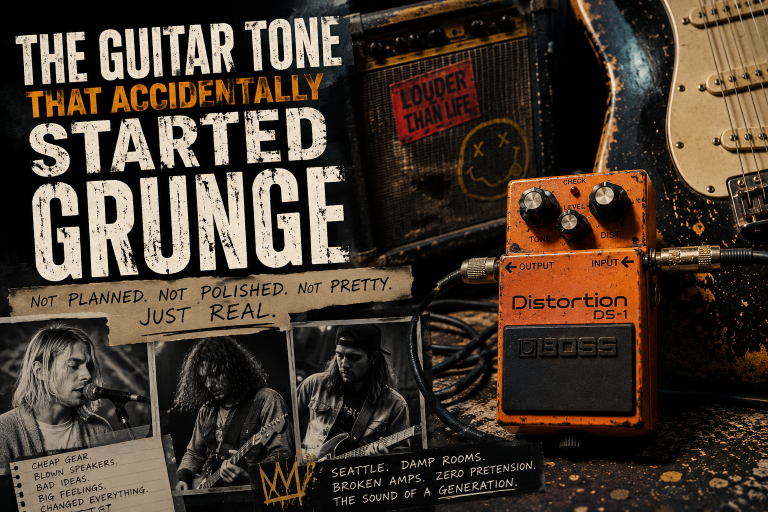
One accidental hero in this story was the humble Boss DS 1 distortion pedal. Yep. That little orange box. Not some mythical thousand dollar boutique pedal handcrafted by monks in the mountains of Norway. Just a relatively cheap distortion pedal that musicians could actually afford.
Players like Kurt Cobain helped turn that gritty, fuzzy, abrasive distortion into the defining sound of an era. Plugged into Fender amps, cheap solid state setups, or whatever happened to function that week, the tone created this strange emotional contradiction. It sounded aggressive and vulnerable at the same time. That really mattered a lot.
Because grunge was never just about loud guitars. It was about emotional honesty. The tone reflected that perfectly. It wasn’t clean. It wasn’t refined. It wasn’t trying to impress guitar magazines with seventeen minute solos performed while standing on top of a Ferrari. It sounded damaged. And audiences connected with that instantly.
Listen to the opening riff of “Smells Like Teen Spirit.” That guitar tone isn’t technically complicated. In fact, by shred guitar standards of the late 1980s, it was almost primitive. But it carried weight. The fuzz and saturation created this wall of sound that felt like frustration exploding through cheap speakers in somebody’s garage. That was the magic and it killed the metal Gods both literally and figuratively.
The imperfections became the identity. The Seattle scene also embraced layering distortion in unusual ways. Muddy tones that would have horrified traditional producers suddenly became desirable. Guitar tracks weren’t always cleanly separated. Bass frequencies bled into the mix. Everything sounded slightly out of control. Ironically, that chaos made the music feel more alive.
Bands like Soundgarden added darker, thicker tones with dropped tunings and sludgy riff construction. Alice In Chains mixed metallic heaviness with eerie vocal harmonies. Pearl Jam brought more classic rock influence into the mix, but still kept enough grit to avoid sounding too polished. Mudhoney practically treated distortion like a competitive sport. And underneath all of it was this strange rejection of perfection. That may actually be the real reason grunge exploded. People were exhausted of standing at concerts and burning their fingers holding lighters in the air. Their heads sore from constantly banging them
By the late 1980s, mainstream rock had become so polished that it almost stopped feeling human. Every snare drum sounded identical. Every guitar solo felt rehearsed down to the millisecond. Every singer looked like they had spent four hours getting ready for a photo shoot inside a wind tunnel.
Then grunge arrived looking like it had slept in a van behind a bowling alley and it sounded glorious.
The guitar tone symbolized rebellion against artificiality. Suddenly players didn’t need expensive gear to matter. You could create something emotionally devastating with secondhand equipment and a broken amplifier held together by duct tape and bad decisions. That changed music culture permanently.
Even today, modern rock bands still chase versions of those tones. Entire industries exist trying to recreate the warmth, grime, fuzz, and unpredictability of early Seattle recordings. Producers spend thousands of dollars attempting to imitate sounds that originally happened because musicians couldn’t afford better equipment. That’s the hilarious part, one of the most influential guitar sounds in rock history may have started because somebody’s gear kind of sucked.
And honestly? That feels very grunge. Every music movement has its own layer of an beautiful accident. Feedback from a speaker too close to a mic. Tom Stolz made a career with Boston in finding mistakes and making beautiful sounds we didn’t know we needed.
The Grunge movement didn’t live on, but the music and its sound will be heard forever.
– R. Masters