
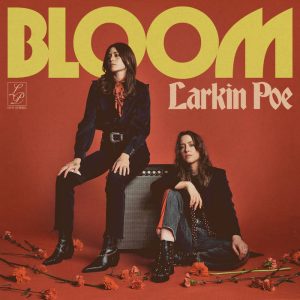
There are albums that sound engineered for playlists. Then there are albums that sound like human beings still trying to say something. Larkin Poe’s Bloom falls firmly into the second category.
The Lovell sisters have spent years building a reputation as one of the hardest-working bands in modern roots rock, and at this point they sound less like a “rising act” and more like a band that quietly figured out who they are while everybody else was busy chasing trends on social media.
That confidence shows up all over Bloom. The album doesn’t scream for attention. It earns it.
Musically, the record lives somewhere between Southern blues rock, swampy Americana, gritty classic rock, and the kind of road tested musicianship that only comes from playing hundreds of shows instead of spending six months learning facial expressions for TikTok clips.The guitars growl, the grooves breathe, and the vocals feel lived in. And thankfully, nobody here sounds trapped inside an overproduced digital prison where every note has been polished until it resembles musical drywall. Not stolen or sampled. Not created by an AI program written yesterday.
Tracks like “Mockingbird” and “Easy Love Pt. 1” immediately establish the tone of the album. There’s swagger here, but it never crosses into parody. One of the biggest problems in modern blues influenced rock is that too many bands sound like they learned “attitude” from whiskey commercials. The original bands were thought to “sell out” in being in a commercial. Larkin Poe sounds authentic because the chemistry is authentic.
Rebecca Lovell’s vocals carry grit without sounding forced, while Megan Lovell’s lap steel work continues to be one of the band’s secret weapons. The interplay between the sisters creates movement inside the songs instead of simply layering instruments on top of each other. That matters more than people realize.
A lot of modern rock records feel stacked vertically. Loud drums. Loud guitars. Loud vocals. Everybody fighting for attention like toddlers after too much birthday cake. Bloom feels horizontal. The instruments actually converse with each other.
“Bluephoria” drifts into moodier territory and proves the band understands restraint just as well as power. Meanwhile “If God Is A Woman” leans into emotional tension without collapsing into melodrama, which is harder to pull off than most people think. And honestly, that may be the biggest strength of the entire album. Nothing feels fake and that sounds simple. It isn’t.
Modern music is drowning in calculated authenticity. Entire marketing teams now attempt to manufacture “raw emotion” with the precision of a military operation. Somewhere there’s probably an intern being asked to make an artist seem “more vulnerable” by Tuesday afternoon.
Bloom avoids all of that nonsense. It sounds like musicians who still care about songs first.
The production also deserves credit for knowing when NOT to interfere. The album keeps warmth and texture intact instead of sterilizing everything into streaming platform perfection. There’s space in these recordings. Air. Movement. Small imperfections that make the performances feel human. Ironically, those imperfections are often what listeners connect to most.
The pacing of the album works particularly well because it avoids the modern temptation to throw twelve identical “singles” at the wall. There are peaks, valleys, tension shifts, quieter moments, and heavier passages. The record actually behaves like an album instead of an algorithmic content dump designed to survive fifteen second attention spans.
What a concept. And that may be why Bloom sticks with you longer than a lot of current releases. It trusts the audience. It assumes listeners are willing to sit with songs for more than thirty seconds before swiping toward a video of somebody reviewing gas station tacos.
WHAT A CRAZY STRATEGY! Huh? Apparently it still works.
By the time the album reaches “Bloom Again,” there’s a sense that Larkin Poe understands exactly where they belong in the modern music landscape. Not chasing pop trends. Not pretending to be vintage museum pieces. Not trying to cosplay as outlaw rock saviors. Not appearing on stage as a legendary throw back.
Just making strong records with soul, grit, musicianship, and enough personality to cut through the endless blur of disposable streaming content.
That alone makes Bloom worth hearing.
Note: anything appearing here that resembles something written anywhere else is pure chance. We wrote it so STFU