
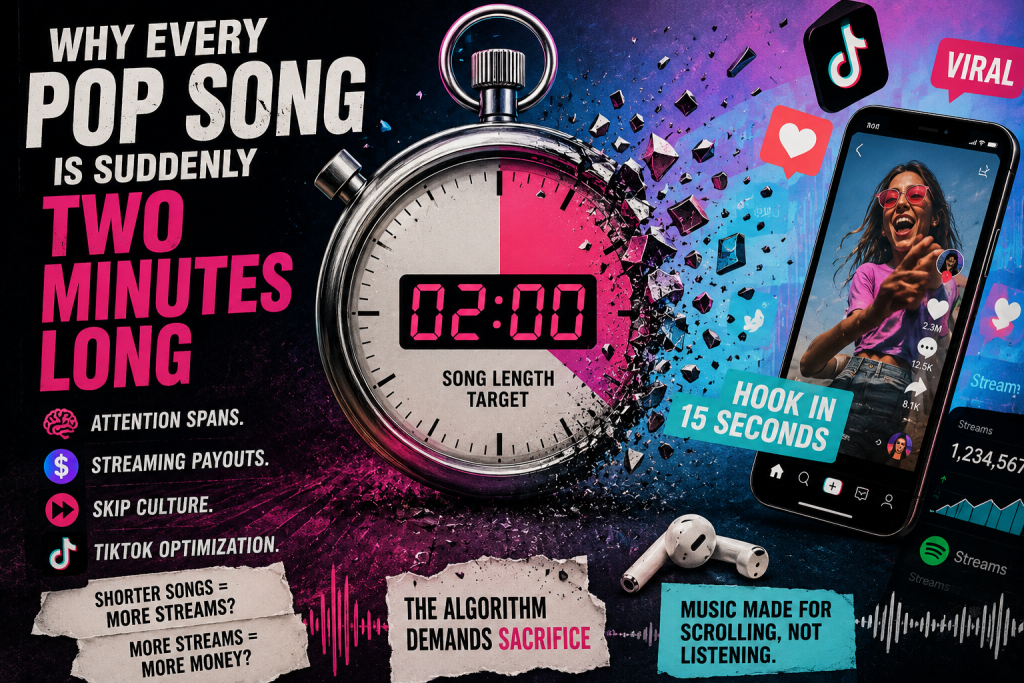
There was a time when songs took their sweet time getting somewhere.
You’d get:
- an intro
- a build
- a verse
- another verse
- an unnecessary but glorious guitar solo
- a bridge
- a key change nobody saw coming
- and occasionally a fade out that lasted long enough to make a sandwich
Now? Modern pop songs arrive like somebody kicked open the studio door yelling: “GET TO THE CHORUS WE’RE LOSING THEM.”
And honestly, that’s because we probably are.
The average hit song keeps getting shorter, and it’s not an accident. Songs are now being engineered for survival inside an ecosystem built around shrinking attention spans, streaming economics, and social media algorithms that behave like caffeinated raccoons smashing buttons in a control room.
Everything changed when music stopped competing only with other music. Now songs compete with:
- videos
- memes
- gaming
- podcasts
- group chats
- livestreams
- doomscrolling
- conspiracy videos narrated by guys whispering into expensive microphones
That changes how music gets made.
Streaming platforms reward repeat plays. Shorter songs mean more completions, more replays, and potentially more streams. From a business perspective, a two minute song that gets replayed twice can outperform a four minute masterpiece listeners hear once while emotionally staring out a rainy window contemplating their existence.
The math became part of the songwriting process. That’s weird. Then came skip culture.
Artists now know they have roughly eight seconds to stop somebody from swiping away toward a video of a golden retriever riding a skateboard through Target. Eight seconds. That means:
- intros vanished
- slow builds disappeared
- instrumental openings got murdered in broad daylight
- choruses arrive before listeners even know the song title
Modern producers often structure tracks like hostage negotiations with the algorithm.
“Please don’t skip.”
“Here’s another hook.”
“Wait come back.”
“Now the chorus again.”
“We added a beat switch.”
“Please validate us.”
And then there’s TikTok. Ah yes. The app that accidentally became one of the most powerful forces in modern music.
TikTok fundamentally changed songwriting because songs are no longer always built around complete listening experiences. They’re often built around “moments.” Fifteen seconds. One hook. One lyric. One emotional punch. One line designed to soundtrack videos of strangers reorganizing kitchen cabinets for seventeen million views.
That single moment becomes the product. The rest of the song occasionally feels like paperwork. This creates a strange side effect where some songs sound less like complete compositions and more like: “the thing before the viral part” and “the thing after the viral part.”
You can practically hear the algorithm shaping arrangement decisions now. Short intro. Immediate vocal. Hook by twenty seconds—minimal bridge. No patience. No wandering. No atmosphere.
Meanwhile, somewhere Bruce Springsteen is still writing songs longer than some independent films and refusing to apologize for it. God bless that man.
The weird part is that audiences actually miss the older pacing more than the industry realizes. People still love:
- dramatic builds
- emotional tension
- musical surprises
- instrumental sections
- storytelling
- atmosphere
- songs that unfold instead of attack
That’s partly why legacy artists continue dominating live performance culture. Their music was built for immersion instead of interruption. The irony is brutal.
The industry optimized songs to survive short attention spans…
…while audiences simultaneously became exhausted by disposable content.
And now people are rediscovering albums, vinyl, long form listening, and artists who trust listeners enough not to panic if the chorus arrives after forty five seconds. Crazy concept. A song can breathe.
Look, not every short song is bad. Punk bands proved decades ago that you can say something powerful in two minutes while setting the building emotionally on fire. But there’s a difference between:
“short because it works artistically” and “short because the algorithm demands sacrifice.” Fans can feel that difference.
Even if executives pretend to understand youth culture, inside conference rooms full of energy drinks and engagement charts cannot.
One last thought: If The Allman Brothers Band released their first album today, they all would be washing dishes at Denny’s.