
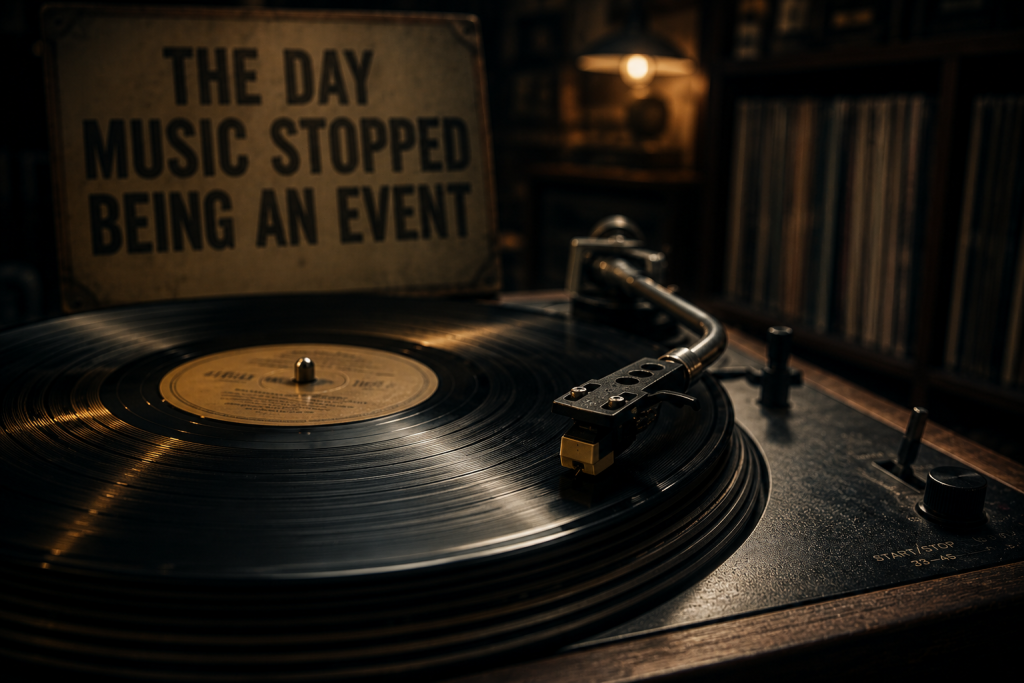
There was a time when music required effort. Not much effort. But enough effort to make it matter.
You had to:
- wait for release dates, just before summer and right before Christmas
- save money for albums, $7.99 seemed like a fortune
- drive to record stores, or have Mom and Dad drive you
- argue with your friends about which song was best, because you all were music critics
- stare at liner notes while listening through terrible headphones, was ELO really singing “Bruce?”
- and occasionally risk social humiliation by buying an album with truly questionable cover art in public, I swear that woman is naked and I think I can see something
Music used to arrive with anticipation. Now it arrives like tap water. Constant. Unlimited. Barely noticed. And somewhere along the way, music stopped feeling like an event.
Midnight album releases used to mean something. Fans lined up outside stores. Radio stations played full album premieres. Friends called each other after first listens. Entire weeks revolved around a release from a major artist.
Now albums quietly appear on streaming platforms at 12:01 while people accidentally discover them three days later between videos of raccoons stealing pizza or the latest Tik Tok dance (we don’t dance, thus no Tik Tok).
Progress. The strange thing is that access improved while emotional connection weakened. We gained convenience. We lost ritual. Anticipation is the best part of the process. Waiting for Christmas morning often leads to melancholy by Christmas afternoon when all that remains are wrapping paper, dead batteries, and the strange realization that anticipation was part of the magic all along.
Record stores were part of the experience because discovery had physical weight to it. You wandered. You explored. You bought albums because of:
- cover art
- band names
- recommendations
- magazine reviews
- mysterious instincts
Sometimes you got burned. Sometimes you discovered a band that changed your life.
Streaming removed friction, but friction was part of the emotional investment. And then there were liner notes.
God, we lost something there. You didn’t just listen to albums. You studied them.
Lyrics. Thank you sections. Producer credits. Studio photos. An address, if you were lucky, to write to and receive something only for the true fans. Tiny details nobody talks about anymore.
Fans knew who played bass. Who engineered the record. Which studio the album was recorded in. Who wrote which songs. Albums felt crafted.
Now songs often feel consumed instead of experienced. Disposable. Replaceable. Background noise for multitasking.
And yes, some of this is nostalgia. Let’s not pretend otherwise. But not all nostalgia is meaningless.
Sometimes nostalgia is your brain recognizing that something valuable disappeared quietly while everybody was distracted by convenience. The industry optimized music for:
- speed
- accessibility
- volume
- algorithmic discovery
- passive listening
What got lost was intentionality. Albums became “content.” Songs became “assets.” Listeners became “engagement.”
That language alone tells you everything. Creativity was replaced by record companies telling artists “your contract says you owe us two more albums by January.”
The irony is that audiences are beginning to crave events again. Look at what’s resurging:
- vinyl
- anniversary tours
- album playthrough concerts
- deluxe editions
- collector culture
- long form interviews
- physical merch
- music documentaries
People miss emotional connection to music culture. Not just access to songs. Because deep down, nobody remembers the infinite playlist they casually shuffled while folding laundry three years ago.
They remember moments. The first time hearing an album. The drive to the record store. The poster on the bedroom wall. The scratched CD they played to death.The lyrics they memorized. The records that became part of their identity. Who they made out with in the dark of their dad’s Pontiac when Love Bites was playing for the first time on the radio.
Music used to occupy space in people’s lives. Now it often occupies background bandwidth.
That may be the biggest loss of all. THANK GOD FOR MASTERS RADIO! We aren’t pushing artists to the side. We are shining a spotlight on them once again. Because we care. Because they are still writing songs. Because it…still…matters.