
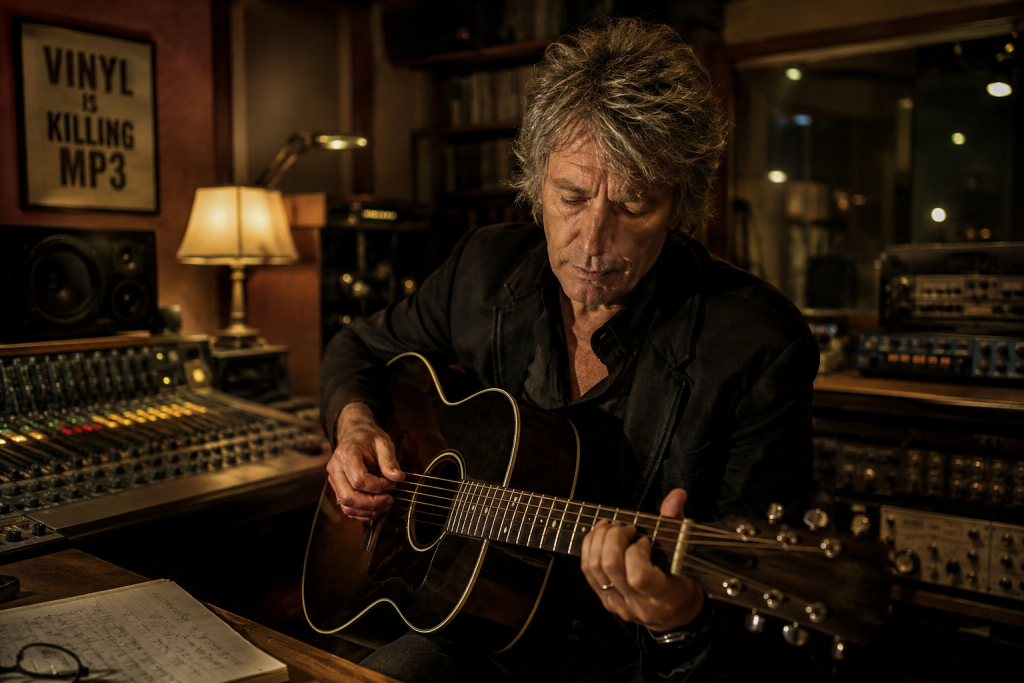
There’s a strange thing that happens once an artist becomes legendary. The public freezes them in time.
One giant hit becomes their entire identity forever. Radio stations keep spinning the same songs from 1984 like they’re trapped in a musical time loop designed by a guy named Gary who still owns three sleeveless jean jackets and thinks streaming ruined civilization.
Meanwhile, the artists themselves keep creating. Quietly. Constantly.
And in a lot of cases? The newer material is every bit as good as the stuff people already worship. Sometimes it’s better. More honest. More experimental. Less obsessed with chart positions and more focused on actual artistry.
But the audience never hears it because society apparently decided that once somebody turns 50, they should legally be required to spend the rest of their career performing “the hits” beside a casino buffet and a merch table selling commemorative shot glasses. That’s where things get interesting.
Take Peter Gabriel. Most casual listeners stop at “Sledgehammer” and “In Your Eyes.” Meanwhile, Gabriel spent decades continuing to release deeply atmospheric, emotionally layered music that pushed technology and songwriting forward long after most artists would have settled into nostalgia mode. His recent material sounds like someone still genuinely curious about sound itself instead of someone trying to recreate 1986 for the 11,000th time.
Or Tears for Fears. Most people mentally parked them next to shoulder pads and VHS tapes sometime around the first Bush administration. Then they quietly released The Tipping Point in 2022, which turned out to be thoughtful, emotional, beautifully produced, and honestly better than about 90 percent of what modern pop radio keeps trying to convince us is “important.”
Same story with The Church. Everybody remembers “Under the Milky Way.” Almost nobody realizes they’ve continued releasing rich, atmospheric albums for decades while influencing entire generations of dream pop and indie artists who probably owe them royalty checks and fruit baskets.
And then there’s Crowded House. People remember “Don’t Dream It’s Over” because, well, of course they do. But Neil Finn has continued writing songs with the kind of melodic craftsmanship most modern songwriters would trade a kidney to achieve. The newer records carry the wisdom and bruises of age without sounding tired or cynical.
That’s the part nobody tells you about veteran artists. A lot of them get better. The lyrics deepen. The ego fades a little. The pressure disappears. They stop chasing trends and start chasing truth. Some of the most emotionally devastating songs ever written came from artists decades removed from their commercial peak.
But modern music culture has a horrible habit of treating older artists like museum exhibits instead of living creators. “Play the old one!” “Do the hit!” “Remember when you were young?”
Meanwhile the artist is standing there holding a brilliant new song nobody bothered to hear because everybody was too busy demanding the soundtrack to their sophomore year prom.
That’s one of the reasons Masters Radio exists in the first place. Not to replay the past endlessly. To remind people the story didn’t end there. Because some of the most interesting music these artists ever made is happening right now while the rest of the world keeps replaying the same twelve songs from 1987 like a cultural security blanket.
The legends never stopped creating. Most people just stopped listening.