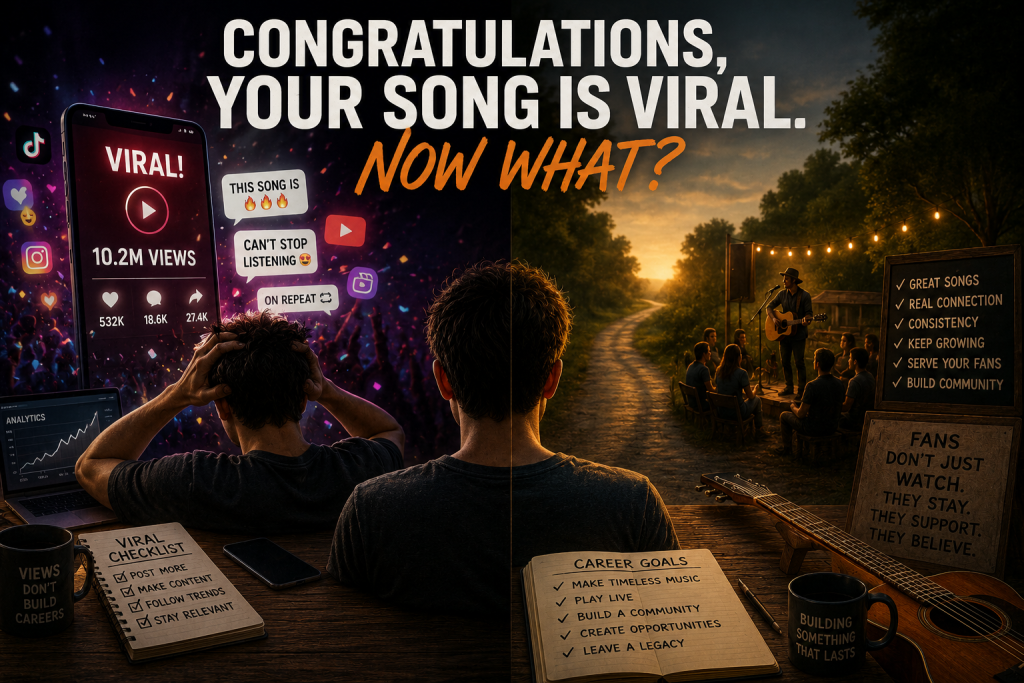
For years, musicians dreamed of hearing one sentence.
“Your song is a hit.”
Today, that sentence has been replaced with something that sounds even more exciting.
“Your song just went viral.”
Millions of views. Thousands of shares. Trending on TikTok. Instagram reels. YouTube Shorts. Overnight fame. It sounds like the modern version of winning the lottery.
But once the celebration dies down, a difficult question remains. Now what?
The music industry has quietly convinced an entire generation of artists that virality is the destination. In reality, it’s often just the beginning of a completely different challenge. A viral song may introduce millions of people to an artist, but it doesn’t necessarily build a career.
History is filled with one-hit wonders. Social media simply accelerated the timeline. Today, a song can explode on Monday and be forgotten by Friday. That isn’t because the music wasn’t good. It’s because the internet rarely rewards permanence. It rewards novelty.
Every day another trend arrives. Another dance. Another meme. Another challenge. Another fifteen-second clip demanding everyone’s attention.
Artists are no longer competing against other musicians. They’re competing against every piece of content on the internet. That’s an impossible race to win forever. The irony is that some of the most successful artists in history never experienced anything remotely resembling “viral.”
Bruce Springsteen didn’t build a career because one song dominated a week’s worth of social media posts. Tom Petty didn’t become legendary because an algorithm favored him. Pearl Jam wasn’t created by trending hashtags. Their careers were built one fan at a time. One concert. One album. One unforgettable performance. One recommendation from a friend. That kind of growth wasn’t glamorous, but it was durable.
Today’s music culture often encourages the opposite. Artists are told to create content constantly. Film yourself recording. Film yourself reacting. Film yourself announcing that you’ll soon be filming yourself. Spend hours studying algorithms instead of songwriting because someone somewhere insists that’s the only path to success.
The result is a generation of musicians working full-time as content creators and squeezing music into whatever time remains. That’s backwards.
Music should create the audience. The audience shouldn’t become the product. Virality itself isn’t the problem. In fact, it’s an incredible opportunity when viewed correctly.
Imagine introducing your music to five million people overnight. That’s extraordinary. Previous generations of musicians would have considered that impossible.
The mistake is assuming those five million viewers automatically become five million fans. Most don’t. Some never hear another song. Some never remember your name. Some couldn’t identify you if you walked past them tomorrow. Views measure attention. Careers measure loyalty. Those are very different things.
A sustainable music career isn’t built on moments. It’s built on relationships.
Fans return because artists continue giving them reasons to return. New songs. Great live performances. Honest storytelling. Personal connection. Consistency. Trust. That kind of relationship cannot be manufactured by an algorithm. Algorithms can introduce people. Only artists can keep them.
Ironically, some of today’s most respected musicians have relatively modest social numbers compared to influencers with millions of followers. Yet those same musicians sell out theaters. Their fans buy vinyl. They purchase merchandise. They support crowdfunding campaigns. They travel hundreds of miles to attend concerts.
Why? Because they’re invested in the artist, not simply entertained by a video.
Music has always been emotional before it was mathematical. Somewhere along the way we started measuring success almost entirely through metrics.
- Streams.
- Views.
- Likes.
- Shares.
- Followers.
Those numbers matter, but they don’t tell the whole story. A million streams don’t automatically pay the mortgage. Ten million views don’t guarantee next month’s rent. A trending song doesn’t guarantee another one.
The healthiest careers are often built quietly. They aren’t fueled by a single viral explosion. They’re fueled by thousands of listeners who become lifelong supporters. That’s one reason legendary artists continue touring decades after their first hit.
Their careers weren’t built on moments of internet attention. They were built on decades of trust. Fans know what they’re getting. Artists know who they’re serving. Everyone benefits.
Perhaps that’s why so many established musicians continue creating remarkable new music long after the spotlight moved elsewhere. They’re no longer chasing trends. They’re serving audiences. That’s a liberating place to create from.
Maybe the future of music isn’t choosing between algorithms and artistry. Maybe it’s understanding the role each one should play. Virality should be the invitation. Not the destination.
If a song explodes online, wonderful. Celebrate it. Enjoy every moment. Use the attention wisely. Invite listeners deeper. Give them another song. Tell them your story. Build a community. Earn their trust.
Because when the next trend inevitably arrives—and it always does—the artists who survive won’t necessarily be the ones with the biggest viral moment. They’ll be the ones who transformed casual listeners into lifelong fans.
At Masters Radio, we believe that’s where the future of music belongs. Not in chasing the next fifteen seconds of internet fame. But in building careers that are still thriving fifteen years from now.
Congratulations. Your song went viral. Now it’s time to build something that lasts.